About Us
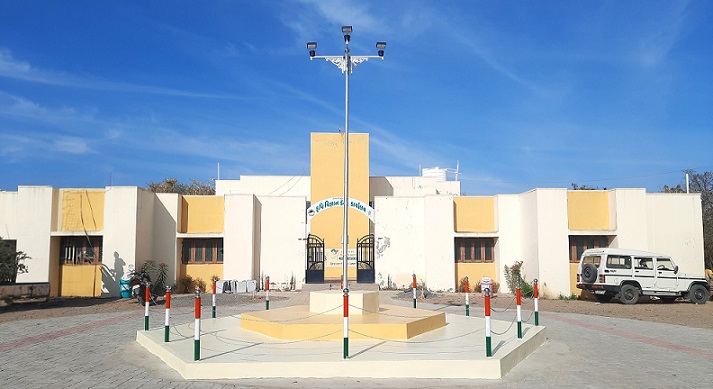
Krishi Vigyan Kendra of Bhavnagar has initiated its activities in the district from November, 2010. A participatory approach (PRA) is adopted to conduct the bench mark surveys with a view to identify the needs of farming community of the district at grassroot level. Based on the surveys, farming needs, problems, technological gaps and their possible solutions were identified and prioritized. To achieve the desired results area specific objectives and thrust areas are formulated;
Objectives
To increase production and productivity of the major crops of the district
To promote risk management strategies in farm production to minimize production loss
To increase farm income per unit area
To promote sustainable natural resource management for environmental safety
To promote self-employment among rural youth in agriculture sector
To serve as a frontline extension agency and resource centre for latest agricultural technologies
Thurst areas:
Capacity building of farmers, farm women, rural youth to orient them to the latest technologies
Integrated nutrient, weed, pest & disease management in major crops
Establishment of production potential of newly recommended agricultural technologies
Promotion of climate resilient and innovative technologies, crop diversification and integrated farming system models
Promotion of animal husbandry and allied sector activities to support farm income and risk management
Promotion of eco-friendly agricultural practices to reduce chemical load and cost of cultivation
Promotion of drudgery reduction tools and technologies and farm mechanization
Farm women empowerment through capacity building and income generating activities
Promotion of Agri-entrepreneurship among rural youth for self-employment
To ensure availability of quality farm inputs to farmers from reliable sources
Establishment of convergence among the stake holders working in the same sector and for the same objectives
About Host organization:
Lokbharti Gramvidyapith Trust, the host organization of Krishi Vigyan Kendra – Bhavnagar, founded by the well-known educationist and Ghadhian shri. Nanabhai Bhatt, is a rural vidyapith. With the mission to enlighten a constant flame of education for the deprived people of villages ushering sustainable development in accordance with the Nature and Culture of our country, Lokbharti Gramvidyapith was formally inaugurated at Sanosara village of Bhavnagar district of Gujarat state on “Budhdha Poornima” (28th May, 1953) by the auspicious hands of shri. Kakasaheb Kalelkar. The aims and objectives of Lokbharti emphasize on “Vidya” means the introspective knowledge of the self and “Avidya” means the wisdom and skills that one learns in life, must be taught together in a correlated manner based on practical, productive labour and social living together. The culture is what makes a person truly human. Culture is lying dormant in the lives of the rural people. Lokbharti aims at awakening them to this culture through the fundamental education.
Objectives:
-
To prepare local fearless leadership based on productive labour having sound and scientific outlook (perspective) appropriate to Nature and Culture of our Country
-
To impart education through participatory approach which can abolish the darkness among the deprived rural people.
-
To awaken virtues, values and skills which are lying dormant in the poorest villagers.
-
To contribute its best in creating a Sarvodaya Samaj by working on the Gandhian line.
-
To conduct experiments in the field of rural higher education through the three-fold function of Teaching, Extension and Research.
-
To impart the students the practical experiences of life and society.
-
To prepare organized community based on cooperation, peoples’ participation, harmony and traditional knowledge.